Showing posts with label illustration. Show all posts

Tuesday, 12 May 2015

True Friends Illustration


Friends! Hmmm . . . where to begin?

It's a topic that's very much on my mind these days.

As time goes by, I've become increasingly aware of the value of friendship. And yet each year that passes, the number of people I would call real, true friends gets smaller and smaller.

Some of my good friends have died; frankly, more than I would have expected at our age, especially as we keep hearing on the media that we're all living longer.

Others, from places I used to live and who were maybe not the closest of friends, have allowed the physical distance between our homes to finally let go of an increasingly meaningless 'friendship'. And then there are some who have been unable to understand, let alone support, the fact that I have finally set out in pursuit of the career I always wanted, at the point when most of my contemporaries are winding down into retirement. Sadly, another parting of the ways.

And it isn't easy to make new friends later in life when we can no longer make friends whilst waiting for our offspring at the school gate. And those of us who have retired or work at home no longer have the opportunity to turn work colleagues into friends.

I'm sure they serve a very useful function for some but I for one am not quite ready for the likes of Lunch Clubs for Seniors in the Community Centre! 

But I've come to realise that I'm one of the luckier ones!  I do have a few 'best buddies', true friends who, although they live hundreds of miles away, also live in my heart!


Please feel free to save and print this A4 300 dpi Friendship Quote
or maybe just 'Pin' it?


But loneliness and social isolation is rife amongst older people. 
The replacement of the extended family by the 'nuclear' model has played a large part in that. Times change, sometimes, but not always, for the better.

One day my son commented that there are a lot of 'old people' in Abergavenny! I hadn't noticed it but once he mentioned it, I started to realise how right he was. As I cross the park on my way to the shops, I often overtake older people, out for their daily breath of fresh air. Normally I'm in such a hurry that I bowl past them at a rate of knots. 

But if I can spare the time, I've begun stopping for a chat and I'm finding that it's very much appreciated.

It's easy to get into conversation, surrounded as we are by the beautiful trees in the park as well as the mountains, there's always something to talk about. And of course, we Brits are always ready to talk about the weather! It means I have to walk much more slowly than usual but I think it's worth it to see how pleased people are to have someone to chat with, even if it's only for five minutes or so.

I'm not pretending that these brief, chance encounters are a replacement for a lasting friendship - our paths may never cross again. But they are better than nothing, by a long way!

When I'm busy working, I can go for several days without speaking to anyone. As an introvert with work that I enjoy, that doesn't bother me too much. I also have family who are at the other end of a phone/email/text message - and of course, I have friends online!

Some of the older people I meet on my way to the shops have nobody to talk to and very little to fill their days. But they do love to talk about their family or their former job or career, if only there's someone to really listen!

So please, if you possibly can, spare a little time for the older generation - you might find it more rewarding than you ever imagined!


Thursday, 11 July 2013

E-interview with Surface Pattern Designer, Wendy Flynn


This month's e-interview is with an artist from London who specialises in Surface Pattern Design and Illustration, Wendy Flynn.

Wendy's website
          Wendy's blog
Wendy on facebook
         Wendy on twitter

As usual, I began by asking Wendy: 

When did you first realise that you were an artist? 
I suppose when i was very young, it is all i ever wanted to do. I was always drawing and making things as a child and helping everyone else with their drawings in junior school! 

Have you had formal art/design/illustration training?
Yes I  have a BA in graphic design from Bath Spa; I spent most of the time in the colour darkroom and on the computer and they didn't quite know how to pigeon hole me at the end of the course as none of the other Illustrators were using those processes, which seems bonkers now as so many people only use the computer! It was only 1998! You were well ahead of the rest of us then, Wendy!!!

So, Wendy, what was the most important thing you learnt from your course? Tricky but I think it was actually something a tutor on my foundation course told me which was: to subvert the brief, i.e make it my own. That was my turning point on my degree course. I was having a really hard time in typography class and had contacted my old tutor. His advice to make it my own totally changed the way I worked. And my B+ in typography that term is all down to making an illustration out of tin foil and pink fake fur! I wish we could see it!

What is your favourite medium? 
I love Ink and a dip pen or a sharpened stick and adding colour in Adobe Photoshop.


Which artists/designers/illustrators inspire you, Wendy?
Orla Keily  for her simplicity and Miroslav Sasek for his great Illustrations


That looks like my Early Seventies Kenwood I see there, Wendy!


I see your business name is Doris and Fred, named after your grandparents. How long has your business been up and running?
Seriously, as Doris and Fred, since I graduated from the ABSPD course this year, although I was using the name before that for freelance work and my etsy and folksy shops since about 2008.

You mentioned your etsy and folksy shops - where else do you sell your work? 
These are my other outlets at the moment -


Do you enjoy the business side of things, Wendy? 
No! I hate talking about my work! I find it very hard to sell myself and really hate talking money! I think i need an agent!

Have you had any training in the art business? 
I took the Rachael Taylor course which has been really helpful.


Why did you decide to specialise in Surface Pattern?
I worked in a trend studio for 6 or 7 years and I learned to make patterns there, I really enjoyed it and have just sort of carried on, I tried a few other artistic avenues but have come back to pattern now that i have a family as it is (I hope) something I can do from home and juggle around family life. 


Do you find that the business side of things takes up more time than you would like?
Yes and the social media which seems so important takes up a lot of my time. I can relate to that completely!

Are you working alone or do you have help? 
I work alone.

Do you enjoy that?
Yes actually most of the time I do although I am easily distracted so sometimes I should have someone to pull me back to what I should be doing. I suppose it would be nice to work with a few others but I also like that as I work from home, I don't waste time getting to and from a studio and can work when ever I have the time.

Do you paint or draw regularly?
Yes I draw regularly and even more so since doing the ABSPD course, I had forgotten just how much I enjoy doodling. I do need to get back into making a mess with paints and such but at the moment, I just don't have the space.

Are you still doing what you originally set out to do?
Yes, I think I am; it is just taking me a little bit longer to get there than I had planned.

That's to be expected with a little boy to take into consideration! How many hours per week do you manage to work?  I would say 20 - 30 hours a week. I have help with my little boy 2 days a week and then pretty much work everytime he naps and in the evenings

Do you have regular contact with other artists?
Only online, but that is a great support. Yes, I think that's great too!


What is your biggest achievement - or the one that pleases you most - so far? Having my designs in Urban Outfitters In the US. It was only as a freelancer but it felt great to see designs that I created from scratch on their website and in stores. Wow! That IS an achievement, Wendy!

Is there anything you would like to change about your art business
I would love more time on it but while my little boy is small I need to give him my time and enjoy him, there will be plenty of time, once he is at school, to concentrate full time on Doris & Fred.


And finally, what are your plans for the future?
To find an agent and build my portfolio, then take over the world! Well, maybe not the last bit! But an agent would be beneficial to me, I think. It would allow me to focus my limited time on creating new work and still spend time with my family. 

Wendy, I'm sure all our readers will join me in wishing you joy and success in all your endeavours and in thanking you for taking the time and trouble to answer my questions. I'm sure your replies will provide someone, somewhere with just the information or inspiration (or both!) that they need!

If you have enjoyed this interview and would like to get to know Wendy and her work better, here are the links to her website, blog and social networking sites - 


Thursday, 4 April 2013

E-interview with Mary Beth Cryan, Illustrator, Paper Engineer


This month's e-interview is with 
illustrator and paper engineer,
Mary Beth Cryan from Rhode Island.


Mary Beth's Blog

Mary Beth's Portfolio Website


Mary Beth, when did you first realise that you were an artist?
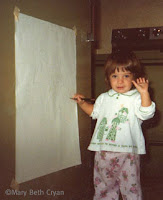
I was born an artist.  I can't remember a time when I didn't consider myself an artist.  My mother was an elementary art teacher turned stay-at-home mom. She started teaching me art as soon as I popped out of the womb.  And I loved it.  There was never a year when "more art supplies" was not on my Christmas wish list.

Although, my love of art may have started before that.  On my last business trip to New York City, I struck up a conversation with a woman in a boutique who claimed to be a spiritual healer. She sensed I had "been creating art for many lifetimes."  When she told me that my first thought was, "I am putting that on my resume immediately!"


Have you had formal art/design/illustration training?
Yes, I have a Bachelor of Fine Arts from Syracuse University with a major in Illustration.

What was the most important thing you learnt from it?
The most important thing I learned was in a Communications design class.  The philosophy of that department was that a good idea must be at the core of every design.  At the time I didn't realize the importance of the lesson.  But over the years, real work experience has proven the point true.


What do you consider the most important thing you have learnt on your journey as an artist and from whom did you learnt it?
The most important thing I've learned is an artist must think of themselves as a business person.  My father taught me this.  He is a professional children's photographer.  He has taught me almost everything I know about running a small business.  I owe my success to him.

Which artists/designers/illustrators inspire you?
I am influenced by every piece of art I ever see in every discipline.  I follow about 200 different art blogs.  I have a constant thirst to see new art that can't be satiated.  It's annoying actually.  Right now I'm most inspired by fashion designers.

Some of my favorites are Dries Van Noten, Manish Arora, Prabal Gurung, Marc Jacobs, Mary Katrantzou, Miuccia Prada, Prabal Gurung, Lazaro Hernandez and Jack McCollough (Proenza Schouler), Thakoon Panichgul,  Tsumari Chisato, Viktor Horsting and Rolf Snoeren and the list goes on and on.

I love fashion because of its fast pace and ability to be worn.  I consider it the front trenches of the art world.


What is your favourite medium?
Adobe Illustrator is my favorite medium.  I know that's weird but I love it.  I think it's cool that it's a new medium that only artists from the present time have had the opportunity to use.  Let's face it, I can't compete with Degas at painting but I can kick his butt at vector art!

How long has your business been up and running?
 I quit my full time toy design job almost eight years ago to start my own business.

Are there any particular pitfalls that have caused difficulties for your business that you would like to warn others about?
I would just warn people that they should expect to work really, really hard.  There is nothing easy about running your own business.  I work harder now than I've ever worked before and I'm the worst boss I've ever had.  But it's the most rewarding job I've ever had.  I could never go back to working for someone else's dream.  Life is too short.


Do you enjoy the business side of things?
No.  But I'd rather do it myself than hire an agent.

Have you had any training in the art business?
I'm a business school dropout.  A few years after I graduated from Syracuse University I went back to school as an MBA student at Bryant University (then Bryant College) at night while I worked full
time at my toy design job.  I knew I wanted to start my own business and needed to learn about business.  The program was geared toward corporate business.  So it wasn't as relevant as I had hoped.  I left the program after a few semesters.

But I learned a ton about the "business mindset."  Ironically, I had to take a class in geometry that eventually ended up being invaluable when I started doing paper engineering.  I've also taken all of J'net Smith's art licensing classes.

In addition, my husband is gifted sales person. He is forever teaching me sales techniques.


Mary Beth, I see that you specialise in 'paper engineering, surface pattern design, and product concepts'. How did that come about?
The common thread between them is they are all 3 dimensional product based.  I LOOOOOOOOOOOVE consumer product.  I want to make lots of it.  I find nothing more satisfying than seeing my illustrations on a 3 dimensional product (books included).


Do you find that the business side of things takes up more time than you would like?
I don't feel that the business side takes up that much of my time.  I do a lot of books which are long projects.  The longer the project, the less projects fit in a year, the less needs to be recorded, the less business there is.


That sounds good! Are you working alone or do you have help?
I work by myself in my home studio.  I have a few freelancers that help me from time to time.

I really enjoy working alone.  I need complete silence to work.  I don't know how I ever worked in a design studio with many designers chatting and playing music.  I could never go back to that.  I really like people and was afraid I would be lonely when I went freelance.  But I'm not lonely at all.


Do you paint/draw regularly?
I get to draw everyday for work.

It has taken me a while to arrive at where I'm happiest, designing repeating patterns, via screenprinting,  painting in soft pastels, then Greeting Card design . Are you still doing what you originally set out to do?
Yes.  I consider when "I set out" the time when I left home to go to college to become a professional artist and that is what I'm currently doing.  I "set out" again when I left my job to start my own illustration business and I'm still doing that too.

Do you have some idea of how many hours per week you work?
It depends how busy I am.  I try to only work 40 hours a week because I work very intensely and have to be careful not to burn myself out.  But I probably work closer to 50.  When I'm really busy, closer to 60.  If you count all the time I'm researching on the internet, shopping the market, talking about business, and thinking about work, I work 24 hours a day, 7 days a week

I know the feeling! Do you have regular contact with other artists?
Yes.  Almost everyone I know is an artist including my dad, mother, and one of my two brothers.  In Rhode Island you can't throw a stone without hitting an artist.  I need to work on finding some friends that aren't artists.

Thank goodness my husband is not one. Otherwise I would talk of nothing but art all the time.


What do you consider your biggest achievement – or the one that pleases you most – so far?
I'm most proud of the work I've done for the MoMA (the Museum of Modern Art in New York City) and the books I've done.  I'm one of the regular contributing artists for the MoMA's line of holiday greeting cards.  If I have a bad day, that fact makes me feel better.  I currently have 7 paper crafting books out on the market. I am very proud of them.  I have 5 more coming out this year.  I love books and consider it an honor to be able to create them.

Wow - that is quite an achievement! But is there anything you would like to change about your art business?
I would like to have more time to spend with my family which is going to involve working less.  This is hard for me.

Do you have a favourite quote, art-related or otherwise?
I have a bunch of art related quotes on the left hand column of my blog .  Right now my favorite is "She wasn't where she had been. She wasn't where she was going…but she was on her way. " - Jodi Hills  It's not specifically about art but it's how I've been feeling about my art career lately .


And finally, what are your plans for the future, Mary Beth?
I plan to create many more books and to get deeper into art licensing.  I'm currently working on a body of
work with a style appropriate for women.  I have plans to unleash it on the art licensing world soon.

I am sure all our readers will join me in wishing you every success with that. It sounds intriguing and I hope you'll come back and share it with us once it's 'unleashed'!


Thank you so much, Mary Beth, for finding the time to give us the opportunity to get to know you and your work better. I'm sure your insights and your success will encourage and inspire anyone who reads this!


.


Thursday, 27 January 2011

Guest Post by Illustrator/Author Diana Ting Delosh


Our guest post this week is an 'email interview' with Diana Ting Delosh, illustrator and author, whose work I have very much admired ever since I discovered it a couple of years ago.


Diana also designs wonderful greeting cards and she has stores at Greeting Card Universe and Zazzle. And you can see more of Diana's work on her website and blogs - links at the foot of this post.


My first question for Diana was:

Why did you choose Illustration as a profession?
'I had always thought that I would go into biology, because I loved animals, until one fateful day in high school biology class when we were supposed to kill and dissect a bullfrog. That was the day I realized I’d better think of something else. As I had been doodling since I was two, being an artist was an obvious choice but what type of artist?  As a child my first exposure to art was through picture books and one of my favorite artists is the illustrator, author Beatrix Potter. Choosing to be an illustrator seemed a natural choice. My training however was a bit circuitous. At the time when I went to school, few colleges offered illustration as a major. So I studied commercial art and took extra illustration classes.'

What did you gain from your Art Training?
'As I was schooled  in the pre-computer era - we were expected to be able to draw everything. No Googling for clip art allowed. So along with design, typography and life drawing classes, we just drew everything. A big part of my art/design education was the group crit. Basically we all displayed our work in front of the class and the teacher and your peers, sometimes humorously, many times cruelly, deconstructed your efforts. This ritual was done weekly in every class. As students we derived a perverse pleasure from surviving our crits as well as dishing them out. The crit did force you to do your very best for each assignment, gave you a discerning eye, taught you how to express why something worked or didn’t work for you and finally helped give your ego a thicker skin'.

Why do you like to work in Ink & Watercolor?
'I create my whimsical illustrations with ink line and “watercolor”. I actually use colored ink as I prefer the intensity of the pigments. I use a Rapidiograph pen to draw my ink line on watercolor paper and then brush in the color. While I have experimented with a few other mediums, this is the one I feel I can get the most range of expression and is the most comfortable for me.'

Animals feature in most of your illustrations and greeting card designs. Is there a particular reason for this?
'Animals play a big part in my personal illustrations. As I noted earlier, Beatrix Potter is my favorite illustrator and as a child I imitated her rabbits until they became part of my own image vocabulary. Early in my illustration career I freelanced for a few greeting card companies. Greeting card companies prefer florals and animal art because people are just too specific. Animals can represent a type. The audience could see themselves as the sweet rabbit or cat but the very specific women with freckles would be limiting. So I created more florals and animals. Yes, I do draw people but I prefer animals because they can be more empathetic and universal'.

Of all the projects you have worked on to date, can you pick out one that is your favourite?
'My favorite illustration projects have been those that I have learned from. I have found that a good editor or art director can bring the best out of you and lead you to a higher artistic level. My own self-directed projects can also be challenging but I find that I usually just have a lot of fun with them. Which is just fine as not everything has to be a learning experience.'

What are you working on at the moment and what are you hopes and plans for the future?
'Currently I’m shopping around a manuscript for a picture book along with a few finished illustrations to publishers. I would love for this project to become a reality.'

'The 2 illustrations posted here are from that story.' 

Diana, I would like to thank you very much indeed for finding the time, from amongst your busy schedule, to answer my queries. I'm sure that reading about your experience as an illustrator will be both helpful and inspiring to others. And I wish you well with your current project and look forward to hearing that it has indeed 'become a reality'!

Diana Ting Delosh
Illustrator
Website: http://dianadelosh.com
Blogs: http://dtdelosh.blogspot.com
http://arthareswares.blogspot.com

.

Tuesday, 19 October 2010

Picture Books for Children

'Picture Books no longer a staple for children' was a headline of a NY Times article last week. 

How very depressing! Although I’ve never quite dipped my toe in the water of Children’s Book Illustration, it’s nevertheless something I feel quite passionately about. Just as I view greeting cards as one way of making art available to all, I see picture books as one way of bring art to small children. And it’s not just any old art; some of the artists I most admire - too many to name them all! - are or have been children’s book illustrators! 


According to the article, it’s not just the economic downturn that is threatening the sales of picture books. That would be understandable and hopefully temporary. No, the suspicion is that book-buying parents are ‘hot-housing’ their children by encouraging them to read chapter books at an ever younger age. No doubt they think they are supporting their child’s education but in many cases leaving out the picture book stage is counterproductive.

This may sound very odd coming from someone who insists on teaching children to read using story books with few or no pictures at all! But there is a good reason (or two!) for that. In the early stages of learning to read, we want to train children to read every word from left to right to give their reading skills a solid foundation. We don’t want them ‘guessing from the pictures’, a strategy that some popular but ill-founded reading programs have, in the past, suggested. If they use an illustration to guess a word, they are not actually learning to read! A bad habit that they will at some point need to get out of.

Another reason for avoiding pictures in the early stages of learning to read is that part of the skill of reading, especially with those to whom it doesn’t come easily, consists of training their eyes to follow the text in sequence from left to right on the page. Pictures can be a great distraction that causes their eyes to flick back and forth all over the page!

So for ‘learning to read’ purposes, the fewer the illustrations the better.

But there is more to reading that just decoding the words on the page, much, much more! It’s first and foremost about instilling in the child a love of books, something that will probably last them a lifetime! I’ve always found it sad to discover children who grow up with no books at all in their homes. So beginning with wonderfully illustrated picture books, some with just a few words and others with no words at all, a whole treasure trove of experience is opened up to the child! I remember one of my grandsons, long before he even began to read, studying the pages of picture books with an intensity that amazed me and I have a photo of my granddaughter, fast asleep but still clutching her picture book tightly in her hand!

Often, if the illustrations are any good, no words at all are necessary to fire the imagination of a child. The story will build naturally in his head! And gradually the introduction of text, read to the child until he is able to read it himself, will lead on seamlessly to a desire to learn to read independently.


During my time as a remedial literacy tutor, again and again, I’ve had parents proudly  telling me about the ‘text-heavy’ chapter books their children read to themselves at night in bed. If the child has any difficulties with reading, this is a step backwards. I know precisely what the children are capable of reading accurately and I know for certain that the books they are reading at home are beyond their reading skills and this is potentially disastrous. They will get into the habit of skimming the page and guessing and when asked to read out loud, there will be little relation to the actual words that are on the page! Not a good way to become a fluent reader!

So I would say to parents who are leaving out this crucial stage of capturing a child’s interest in books and reading, through picture books: please think again; there’s no rush to get on to chapter books! Let you child enjoy the wonderful art available through children’s book illustrators. Lay the foundations for a lifelong love of books, of reading and for that matter of art as well and let your child dictate the pace.

Learning to read and reading, or being read to, for pleasure are two related but quite separate activities; neither should be neglected and the enjoyment of beautifully illustrated picture books is one of the foundation stones on which the enduring habit of reading is built. 

.

Saturday, 16 January 2010

Collage Greeting Cards


It's a bit quiet on the 'sales' front at the moment. No doubt many people are still digesting their post-Christmas credit card bills, so that gives me time to work on stocking up my online 'stores'.

I was checking out the Greeting Card Universe website (see RH column) a couple of days ago to see what 'holidays' are upcoming in America, as there seem to be a great many more card-giving occasions there than in the UK. I clicked on the'Major Holiday Greetings' button and had a huge, and very encouraging, surprise! There were thousands of 'holiday greeting cards' displayed in order of popularity, and to my amazement, there, in the number one slot, was my Snow-balling card!

There's a story behind this design! Last November I had been working on designing greeting cards for a year and I was beginning to feel a bit 'stale'. So I took a break and looked into Children's Book Illustration, as that is another thing I've done a bit of in the past, in a totally amateurish way, for the children I was teaching to read (more on that another day!). I found that there was a lot to discover about illustrating children's books professionally and, as usual, I used the internet to find out what I needed to know. I began to prepare some illustrations for a little poem about a frog and a dragonfly that I had written as part of the Synthetic Phonics Reading/Spelling program I had devised for my pupils. But I soon ran into a snag; I wanted my frog to be clear-cut, to stand out sharply again a much more soft-focus watercolour background and I didn't really know how to achieve that.(mostly done in watercolour pencils)

Masking fluid was one option but I don't get on very well with it and it ruins my brushes; the other option I toyed with was to cut out the frog and stick him onto the background - ie collage!

In the course of my meanderings down the highways and byways of the web, I had already discovered that Eric Carle, creator of the famous 40-yr old 'Very Hungry Caterpillar', used collage to make his caterpillar and I had watched the slideshows and videos on his website that show him at work. I was surprised to find that it seems to be quite a popular medium with children's book illustrators

But my biggest discovery was that childrens' author and illustrator, Ezra Jack Keats , also used collage for his illustrations! I had loved his books when my eldest daughter was little enough to have a bedtime story but I hadn't paid much attention to the actual stories (which I've now learned were controversial at the time!) because I was too busy drooling over the wonderfully vibrant images!

I'd never done collage before, never even seriously considered it - apart from a display board in my classroom, more than thirty years ago, when I was using 'Peter and the Wolf' for 'music and movement' with my class of seven-year olds and decided to link it to art lessons. Together we created an enormous tree with the more artistically inclined children painting the duck, the cat and the bird etc, while the less confident children happily painted a collection of leaves in all shades of green and yellow! But that was a long time ago and as far as I remember, the staple gun played a major part in the assembling of this artistic endeavour!

So for practice, I thought I would to try to make a collage Christmas card. I painted my papers in advance, experimenting with tissue paper, layout paper and even newsprint. I tried out gouache and acrylics for the painting and my attic studio was soon festooned with multicoloured sheets of paper, taped to the beams to dry like washing! I spent an evening working on the design and was finally ready to begin making the collage one afternoon, straight after lunch.

I decided to work on my kitchen table instead of in my attic, as I realised I would need plenty of flat surfaces to spread the papers out on (kitchen worktops!) and soon I was almost drowning in my 'papers'! It took me far longer than I had anticipated - it wasn't long before I realised that my design was far too complex and ambitious for a beginner - and the afternoon came and went, it got dark and my snow-scene was far from finished! I began to get hungry but I couldn't stop to eat because my kitchen was in too much of a mess to find any food! And all the excrutiatingly detailed cutting and gluing was making me physically tense and my slightly 'iffy' back was beginning to complain! So much for creative work being, therapeutic, as suggested here!

When I dropped one of the snowman's tiny 'buttons' on the floor, I was tempted to give up! But, amazingly I found the minute piece again so I took it as a good sign and ploughed on to the end.

I was actually surprisingly pleased with the finished result; though when I scanned it and saw it on my computer screen, I realised that in my tiredness and tension towards the end, I'd made a small but rather noticeable mistake. It's not all that easy to rectify a mistake in collage, but with the aid of my very sharp craft-knife, I managed to put it right. And, curious to know whether I would enjoy collage more as I gained experience, I began to work on a series of children's birthday cards with much simpler, more manageable designs -


Then came my decision to sign up with Greeting Card Universe and all creative work went by the by for the time being in favour of endless hours of scanning and uploading my designs. To my astonishment, the struggle that turned into my Snow-balling card was featured on the GCU homepage (I've no idea how it got there!) and it became my best-seller over the Christmas period; encouraged by this, as well as finding it ranked so high on the 'Holiday Greetings' page a few days ago, I've had another go -


I don't think it's worth giving step-by-step instructions for making a collage here - it's basicly just sticking paper (or other materials!) onto a backing surface and what to stick, and where, is down to the individual artist. But I do think it could be a worthwhile medium to explore for anyone who is not very confident about their drawing skills but who has an eye for colour and composition. So here are my answers to some of the questions that are likely to arise if you have never tried collage before -

  • What sort of paper do you use? I've tried using coloured tissue, bought in a pack from the stationers and unpainted. But I found that the effect was very hit and miss where the colours overlapped. Maybe I would have succeeded with more practice, but once I'd seen Eric Carle painting his papers, that seemed a lot more interesting.
  • What do you use to paint the papers? After some experimenting, I found that acrylics gave a tougher finished paper than gouache. It is easier to cut accurately for the detailed shapes that were needed for the Snow-balling picture. I like the semi-transparency of tissue painted with gouache, though, as here -


  • What do you use to cut the paper with? I use two sizes of scissors and a good, sharp craft-knife. The craft-knife is better for the tougher papers but tends to tear the tissue paper. When I did a lot of screenprinting, I owned a clever craft-knife that cuts smooth curves but I can't find it and I remember it being quite expensive. Might invest in one again when I've earned a bit more money!
  • What sort of glue do you use? I began with wallpaper paste - in fact the whole of the Snow-balling design was coated with paste at the end to make sure all the edges stuck down firmly. But for designs with a lot of small detailed pieces, or when I'm using tissue paper, I prefer a craft glue-stick - one that dries clear, of course. I would never attempt to use wallpaper paste for a design where any part of the background is left exposed as the any stray paste would be likely to show up.
  • What kind of support do you use? All sorts of things! It doesn't matter too much as long as it's reasonably sturdy so that the glue/paste doesn't warp it. (If that does happen, you can usually flatten it by placing it under a pile of heavy books when it's almost dry.) Before Christmas I bought several packs of printer card that were on special offer as a multi-pack, hoping to print some of my own Christmas cards. But I found that the coating on the card wasn't good and the colours printed out looking quite faded. So I'm putting this otherwise redundant card to good use now, using if for my collages.
  • Do you prepare your design first? Only if it's a complicated design where it's important that each element is in the correct place (eg if there is a creature or person in the design). With the Valentine Cards, I just sketched them out very roughly, literally on the back of an envelope, and developed the design as I went along. It's not all that easy to move or remove a piece of your collage if it's in the wrong place, but I find that, if I don't stick down the edges until it's all finished, there is usually scope for lifting a piece off with the point of my craft-knife, as long as the glue hasn't entirely dried.
I'll be happy to answer any queries but the main thing is to have fun and experiment. And if at first you get in a sticky mess, just 'keep calm and carry on!'